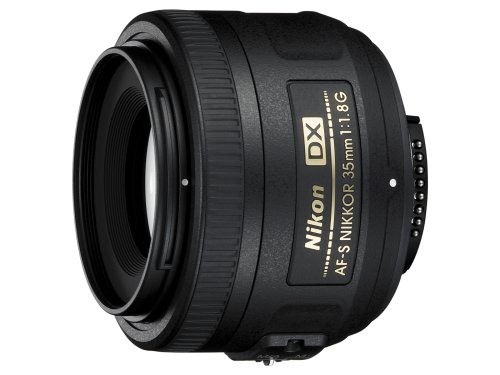
The hottest thing in the digital camera shop is as a matter of fact the digital Slr, which is best known as a dSlr. While dSlrs are flying off dealer shelves, many new users are confused about the terminology. Most habitancy know that Slr stands for "single lens reflex." Since nearly all Slrs accept interchangeable lenses, it would appear they should be known as manifold lens reflex (Mlr) cameras.
If you want to understand how the Slr received it's name, you have to dip into the history of the camera. Early cameras were similar to the view cameras used today. The photographer looked straight through the lens, focused, composed and then inserted a singular film plate behind the optics to make an image. While the entire process was crude by contemporary standards, the photographer enjoyed great control, since he looked directly straight through the actual imaging lens to establish the shot.
While this was fine for still life, portraits and landscapes, this process did not lend itself to activity photography. These early cameras could only report a singular image at a time. Which is why you have never seen a motor-driven view camera.
Realizing the need to offer sequences of exposures, camera makers begin to experiment with varied roll-film designs. With a roll of film in the camera, the photographer could fire off numerous images without reloading. Although this improved throughput dramatically, it caused other problem. The roll of film had to pass closely behind the camera's optics, which meant that the photographer could no longer look straight through the camera lens to establish and focus.
Rangefinder cameras appear to keep things in focus
The lower-end, consumer roll-film cameras commonly used an uncostly "fixed-focus" lens, so a uncomplicated viewfinder was sufficient. best quality optics, however, want the lens to be focused, and since the photographer could not look straight through the lens with a roll-film camera, this was a major problem. One of the first solutions to this qoute was the Rangefinder -- a type of camera that offered a length measuring scale in the viewfinder. By determining the range from the viewfinder, the photographer could then adjust the focus to match -- regularly with very good results.
Twin Lens Reflex cameras offer other solution
While the rangefinder type cameras worked well, the camera industry is always evolving. A second formula of allowing the photographer to focus and establish appeared in the "Twin-Lens Reflex" cameras. These cameras used two same lenses, arranged one on top of the other in the manner of an over-and-under shotgun. The film winds past the lower lens, while the photographer can focus straight through the upper lens. The twin-lens cameras were fairly bulky, so designers added a mirror and ground glass to the top of the camera, hence the term "reflex.
Now the user could hold the camera at waist level and look down at the ground glass which previewed the image via the mirror behind the upper lens. As the user adjusted the focus on the upper lens, a gear mechanism moved the lower "taking lens" to match.
While both rangefinders and twin-lens reflex cameras offered a credible way to focus and preview a shot, neither allowed the photographer to as a matter of fact look straight through the lens. This sometimes made exact composition difficult.
Slrs take cameras other step forward
In their quest to allow users to see straight through the actual "taking" lens, camera makers turned to the periscope -- a uncomplicated device using two mirrors located at opposite angles to bend the light path. Periscopes are easy to understand -- any kid can establish one from a couple of mirrors and some scrap wood.
In a camera, the lower mirror is located at a 45 degree angle directly behind the lens. Light stunning the mirror is projected upwards to a ground glass. While a second mirror would show the image on the ground glass to the user, it would not appear right, because mirrors tend to reverse things. So camera designers added a prism arrangement that corrects the reversed image. When you peer straight through the viewfinder on a Slr, you look straight through a prism, which displays the image on a ground glass, which displays the projected image from the mirror located behind the lens.
There is just one problem. If you have been paying attention, you have no-doubt realized that the lower mirror blocks the light path to the film (or digital sensor as the case may be.) Now the photographer can look though the lens, but the image cannot be projected on to the filmplane.
So the camera designers had to add other wrinkle. They had to move that mirror. Just long sufficient to make an exposure, since when the mirror moved, the photographer could no longer see anything straight through the lens. So they designed the "instant-return" mirror. At the instant of exposure, the mirror flies upward, the shutter fires and the mirror snaps back down. It is a anticipated feat, when you consider that instant return mirrors have to flip up and back in a heartbeat, over and over for the life of the camera.
Once the instant return mirror was perfected, photographers could once again establish their images by seeing straight through the lens. Unlike the twin lens reflex, this new breed of camera needed only one lens to focus and shoot with. So they became known as... You guessed it.... Single-Lens Reflex cameras.
 | Price : $434.99